Since subscribing to giants of the math edubloggosphere, my review tactics have grown tenfold. We've gone from review worksheets pre-quiz to whiteboard reviews & speed dating and the like.
Well, here's another to throw at you. My kid's LOVE math basketball as much as me, but I believe I've just met it's prettier older sister.
Trashketball brought to you by Dan Greene over at Exponential Curve. Enjoy.
Showing posts with label Methods. Show all posts
Showing posts with label Methods. Show all posts

Apr 7, 2009
Never Have an Argument w/ a Student Ever Again
I never have arguments with students. It just doesn't happen. I'm not saying I have great relationships with all my kids; a few of them hate my guts, I'm sure. But I definitely AM saying I never have arguments. Ever. What's the secret?
The end-all phrase. The argument killer. I can almost guarantee it's effectiveness.
Take, for example, Case #1:
"Jordan, please put your headphones away."
"Aww, Mr. G. It's not even on that loud."
"I understand. But, I need you to put your headphones away."
"But you can't even see them!"
"I understand. But, I need you to put your headphones away."
"Aright."
Consider the even more extreme example, Case #2:
"Brianna, I need you to stop talking."
"What? What'd I say? I didn't even say anything!"
"I understand. But, I need you to stop talking."
"You always pick on me. I hate this class!"
"I understand. But, I need you to stop talking."
It may seem like the teacher's become a broken record, but the phrase works. Most arguments stem from a student's need to claim victor, especially in front of an audience. If the teacher concedes outright, the student has already won - the need to win is eliminated. The teacher acknowledges the student's frustrations/anger, but is still able to communicate the intended message. Both parties win.
Rarely do students catch on. I can think of only 2 or 3 instances all year where students have pointed out "you always be sayin' that!" Likewise for instances where the response becomes "no you DON'T understand!" And even during those, my response is still: "I understand."
Argument still evaded. Directive still sent. Disruption eventually resolved.
Try it. But beware, the phrase can easily leak outside the classroom realm...
"...blah, blah, blah, blah... the night was awful! And plus, it was a bad hair day!.... blah, blah, blah"
"I understand. But I need to go to bed now."
[Credit where credit's due]
"I understand."
The end-all phrase. The argument killer. I can almost guarantee it's effectiveness.
Take, for example, Case #1:
"Jordan, please put your headphones away."
"Aww, Mr. G. It's not even on that loud."
"I understand. But, I need you to put your headphones away."
"But you can't even see them!"
"I understand. But, I need you to put your headphones away."
"Aright."
Consider the even more extreme example, Case #2:
"Brianna, I need you to stop talking."
"What? What'd I say? I didn't even say anything!"
"I understand. But, I need you to stop talking."
"You always pick on me. I hate this class!"
"I understand. But, I need you to stop talking."
It may seem like the teacher's become a broken record, but the phrase works. Most arguments stem from a student's need to claim victor, especially in front of an audience. If the teacher concedes outright, the student has already won - the need to win is eliminated. The teacher acknowledges the student's frustrations/anger, but is still able to communicate the intended message. Both parties win.
Rarely do students catch on. I can think of only 2 or 3 instances all year where students have pointed out "you always be sayin' that!" Likewise for instances where the response becomes "no you DON'T understand!" And even during those, my response is still: "I understand."
Argument still evaded. Directive still sent. Disruption eventually resolved.
Try it. But beware, the phrase can easily leak outside the classroom realm...
"...blah, blah, blah, blah... the night was awful! And plus, it was a bad hair day!.... blah, blah, blah"
"I understand. But I need to go to bed now."
[Credit where credit's due]
Feb 28, 2009
Sup Green Teach?
 Followin' up on Ms. R's post cus' I feel it. (er, Emilyn... this blogspot switch is kinda funny cus we no longer got our hip, ambiguous teacher monikers... whatevs).
--
My school's rumored to run out of paper any day now. The first time I got word, I was in disbelief. While in the copy room, I tried for the inside scoop and heard responses along the lines of: "I wouldn't be surprised" "I've seen it happen before." Copy machines are practically a teacher's best friend! Horrible news, horrible.
To get a legit inside scoop, I approached a department head. The response was unexpected. A conversation about paper transformed into complaints about the California budget, about teachers' misuse of resources, and a slam on me. "I probably use a fifth of the amount of paper you use." Ouch.
At first I was angry. If we knew we were going to have this problem, then set a frikkin' paper budget! I got a friend at another school who's limited to 2500 per semester. Here we got no rules; and if there are no rules, I'm going to copy away. Announcing a schoolwide freeze on paper spending due to budget problems after the fact is mismanagement of resources from higher up! What gives you the right to critique me!?
And then I accepted it. You know, I do use a lot of paper. I take pride in my flexibility, in my ability to grow, to change, to adjust to new factors. So, I'm adapting. To start, rather than providing students w/ our normal opener sheet, we're using sheets of lined paper sliced in half. Why didn't I think of this before?

 No more of those, no need. Lined paper, it's the saaaame thing. Nothing HUGE, but every little bit counts, right?
I once heard "In the classroom, as much as possible, allow kids to do everything." Let em pass out papers, let em grade, let teach each other, let em grab their materials. As a teacher, be there to create the space for learning... and do teach, but as much as possible, students are as capable as us. In fact, it helps their learning experience.
I used to think "Ey, as long as it helps their learning. Why not? Paper exists for learning." But, the new theme in mind "In the classroom, as much as possible, be green" is not impossible. If there's something that can be done to save resources, do it. Why not?
Feb 14, 2009
An Overwhelming Influx of Ideas
What sort of best practices work, which fit into my teaching, how can I adjust them to fit my teaching? Will they work for me? Some are contradictory. Teachers who do not practice what they preach.
Veterans around me sit in this auditorium and look just like me: they're bored, impatient, and would rather spend this time working in their classrooms. Our speakers up front continue on with their wordy powerpoint slides: "next slide please, blah blah blah, next slide please, blah blah blah..." Halfway conscious, I shut my laptop. Quarter conscious, I drift away.
But then something hits me, something engages me: "Foldables? A method to engage my kinesthetic learners? Hey, that's cool!" I take note. I consider ways to implement. This can work in my classroom. This can work for my kids. A new era of note-taking I must usher in.
A video on groupwork: group quizzes. What a novel idea! That can work too! Kids helping kids. My role as an effective questioner, never submitting to providing answers to theirs, but rather prod.. and prod some more.
Then a lady says "research has proven student achievement on tests raises considerably if students are hydrated." Another suggests that each teacher chooses a 'target group' of students to watch carefully and provide them special resources so THEIR cst scores can go up. But a seminar last Saturday suggests 'eff' the nclb!
As a young teacher, I'm overloaded w/ an influx of suggestions: philosophies of teaching, methods, proven data, etc. Some of it I like, some of it I don't. Some may even contradict each other. Bottom line: unlike the veteran's around me, I'm open to adapting new ideas to my craft. But I can't decide what's good and what's not!
And so goes the trial & error period of my young teaching career. Learning to teach while teaching so students can learn. Pieces slowly fall into place, but my philosophy, my methods, my views are all far from well-defined.
Veterans around me sit in this auditorium and look just like me: they're bored, impatient, and would rather spend this time working in their classrooms. Our speakers up front continue on with their wordy powerpoint slides: "next slide please, blah blah blah, next slide please, blah blah blah..." Halfway conscious, I shut my laptop. Quarter conscious, I drift away.
But then something hits me, something engages me: "Foldables? A method to engage my kinesthetic learners? Hey, that's cool!" I take note. I consider ways to implement. This can work in my classroom. This can work for my kids. A new era of note-taking I must usher in.
A video on groupwork: group quizzes. What a novel idea! That can work too! Kids helping kids. My role as an effective questioner, never submitting to providing answers to theirs, but rather prod.. and prod some more.
Then a lady says "research has proven student achievement on tests raises considerably if students are hydrated." Another suggests that each teacher chooses a 'target group' of students to watch carefully and provide them special resources so THEIR cst scores can go up. But a seminar last Saturday suggests 'eff' the nclb!
As a young teacher, I'm overloaded w/ an influx of suggestions: philosophies of teaching, methods, proven data, etc. Some of it I like, some of it I don't. Some may even contradict each other. Bottom line: unlike the veteran's around me, I'm open to adapting new ideas to my craft. But I can't decide what's good and what's not!
And so goes the trial & error period of my young teaching career. Learning to teach while teaching so students can learn. Pieces slowly fall into place, but my philosophy, my methods, my views are all far from well-defined.
Feb 11, 2009
Student. Teacher.
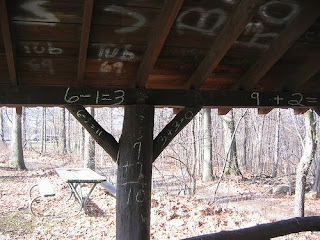
I'm finally on the other side of the Big Desk in a high school classroom, yet I still feel like somewhat of a fraud in including myself in this space for teachers. After day one out in the field, I went home more wide-eyed than when I first walked through the door that morning. But then again, it was hard to open my eyes at all in the wee hours of 7 in the morning. Some things about high school never change.
So, to be real, I'm not a teacher... maybe one day. For now, I'm still a student - a college student learning how to be a good teacher in an Oakland high school. Props to Mr. G for giving me this opportunity to rub elbows with high school students twice my stature and tenfold my own in life experiences.
Anyway, as would any decent college student, I scribbled a few notes about the students, the school day, and - aha! - the teacher, with the vague intention of stowing them away somewhere in case they come in handy one day. Again, no promises yet on the teacher thing. We'll see how the next semester goes. The following are a few lessons which I acquired by the end of my first day on the job.
Lesson #1: Anything can be said with a smile.
...and should be, for that matter. When teaching even the most difficult of concepts, it is helpful to continue the lesson as though there is nowhere else you'd rather be than standing right there in front of the class, lecturing about systems of equations. When answering questions, your delight will encourage students to keep 'em coming. When disciplining a student for their behavior, one subtle smile can let the class know that you still have control over the situation, that you have not lost your cool. Smile when they walk in the door. Smile when the seemingly never-ending class period is finally over. I'm telling you, your eager grin can work wonders. But then again, I suppose it depends on whether or not you have an attractive smile.
Lesson #2: Pay attention to the time.
Mr. G. has a stopwatch in his classroom that couldn't be worth more if it was made of its weight in gold. Sticking to your time schedule in the span of one class period will help ensure that those lost 10-15 minutes here and there every week won't avalanche and sneak up behind you at the end of the semester. Your day-to-day goals should be realistic, yet optimistic. When dealing with small margins of error, it's better to overestimate the reaches of your students than to underestimate.
Lesson #3: Teaching is kind of like juggling, walking the tight rope, and taming lions... all at once.
One kid is asleep in the corner, two are arguing in loud whispers over some pre-pubescent concern, one boy decided that his novel about Vampires is more interesting than the lecture, and only three students show any indication of keeping up with the lesson. Oh, and the telephone just started ringing. Welcome to a teacher's workday, where teaching the actual curriculum requires only about 15%* of your effort. While it may be impossible to cover all bases in the classroom, it's your job to try. In the end... well, I don't know. You may not win 'em all, but even the smallest of victories are worth a pat on the back.
I think I shall end there for now... That's not to say that in 6 hours of interacting with a hundred-some students and one teacher amounted to three measly paragraphs of a blog post. Stay tuned. I'll be back.
*Fun fact: 90% of generalizations are made up on the spot. Gotcha :)
Image Source: Nogwater under Creative Commons
Feb 8, 2009
I Hope to Teach More than Math
There's power behind infusing tidbits or randomness into the classroom. Connection to academic content is unnecessary. Simply spend 2-3 minutes each day discussing something completely irrelevant but appealing. Buy your students' attention. Steal their interest. Give them a reason to show up to class. Give them something to talk about. Give them something to remember. Let them know you're not all math, you're more.
This comes to life in my classroom through the projector. Photos and clips. Photos and clips. They come off as random entertainment, but also serve as an intermission before our brains work math again.
The majority these tidbits are funny or entertaining. Youtube clips of ninja cats or babies biting fingers. Photos of new gizmos and gadgets to highlights of recent sporting events. 2-3 minutes a day - small sacrifice to pay for large impact. Kids' look forward to my class. And they remember it. (As evident by SO MANY ex-students who can still recall... "have you shown ____ yet?"
Today I decided to do something different. Last night, riots occurred in Oakland demeaning what could've been a highly successful, highly meaningful nonviolent protest. Scoping the internet during my prep, I read over what broke out. I also viewed images. Why not take a break from silly intermissions to something more real? Why not show these images? Why not discuss? This is something current, something relevant, AND engaging. I decided.
I'd preface the discussion to prevent it from degenerating into violent story time. This is about politics as personal. I'd set a 5 time limit & ground rules, and we'd do it. The goal: to provide a space for students to discuss issues of social justice, a space for students to be exposed to what's going on in their own backyard, a space for students to voice and form opinions. I'd share my opinion to close, but would emphasize that this is our dialogue... not mine. They ultimately form the vision they'd like to see of the world, not me.
And so it went. And it went well. Each student highly engaged, listening intently to each others' opinion. Of course, I'd interrupt at times and play moderator to students eager to offer disagreement. But it went, and I was happy with it.
What I do hope to impart: Protest and rallies for a meaningful cause is effective. It is our duty to push for progress, especially in a place like Oakland. However, action without organization is unnecessary. And what happened occurred last night weakened the message folks hoped to send.
And now, onto inscribed angle properties...
(Huge credits to MW for the guidance and suggestions on this one).
This comes to life in my classroom through the projector. Photos and clips. Photos and clips. They come off as random entertainment, but also serve as an intermission before our brains work math again.
The majority these tidbits are funny or entertaining. Youtube clips of ninja cats or babies biting fingers. Photos of new gizmos and gadgets to highlights of recent sporting events. 2-3 minutes a day - small sacrifice to pay for large impact. Kids' look forward to my class. And they remember it. (As evident by SO MANY ex-students who can still recall... "have you shown ____ yet?"
Today I decided to do something different. Last night, riots occurred in Oakland demeaning what could've been a highly successful, highly meaningful nonviolent protest. Scoping the internet during my prep, I read over what broke out. I also viewed images. Why not take a break from silly intermissions to something more real? Why not show these images? Why not discuss? This is something current, something relevant, AND engaging. I decided.
I'd preface the discussion to prevent it from degenerating into violent story time. This is about politics as personal. I'd set a 5 time limit & ground rules, and we'd do it. The goal: to provide a space for students to discuss issues of social justice, a space for students to be exposed to what's going on in their own backyard, a space for students to voice and form opinions. I'd share my opinion to close, but would emphasize that this is our dialogue... not mine. They ultimately form the vision they'd like to see of the world, not me.
And so it went. And it went well. Each student highly engaged, listening intently to each others' opinion. Of course, I'd interrupt at times and play moderator to students eager to offer disagreement. But it went, and I was happy with it.
What I do hope to impart: Protest and rallies for a meaningful cause is effective. It is our duty to push for progress, especially in a place like Oakland. However, action without organization is unnecessary. And what happened occurred last night weakened the message folks hoped to send.
And now, onto inscribed angle properties...
(Huge credits to MW for the guidance and suggestions on this one).
Subscribe to:
Posts (Atom)